
The Ultimate Guide: Safely Shipping a 1960s Classic Car via JFK Air Freight to Philadelphia
Yorka Auto Transport Team
Author
March 16, 2026
Published
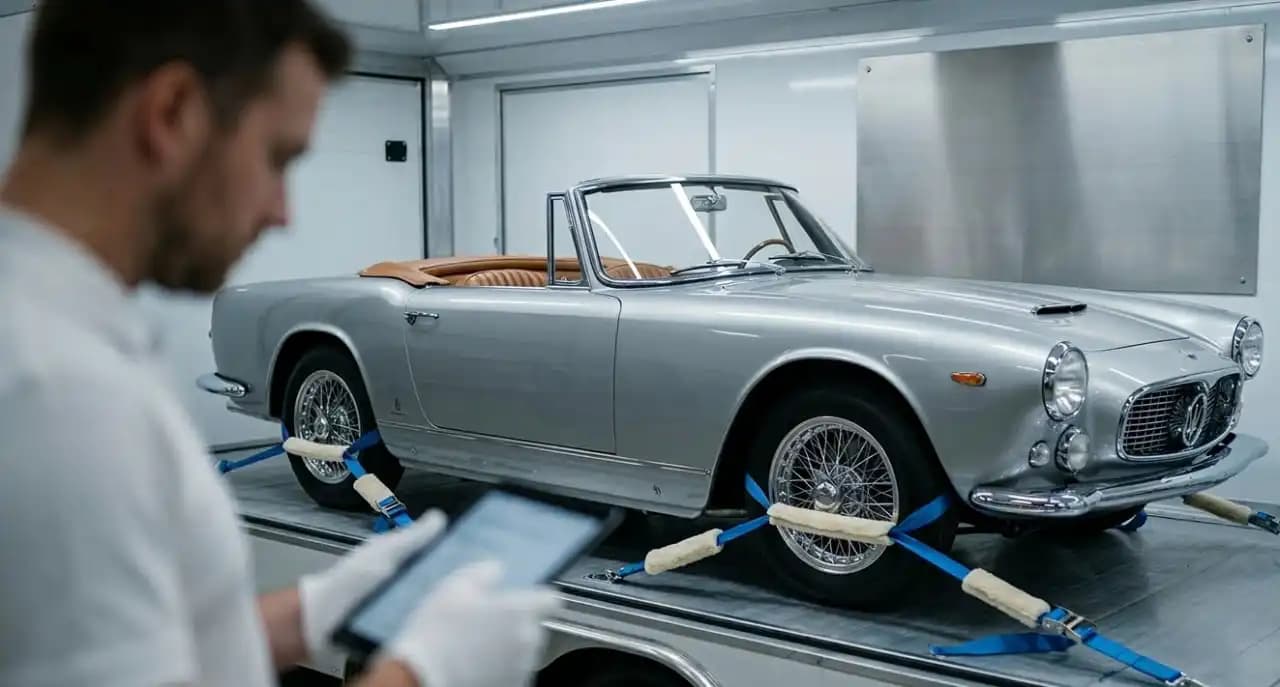

Transporting a vintage masterpiece, such as a 1960s classic car, is not a mere logistical task—it is an act of preserving history. Whether you are importing a 1961 Maserati 3500 GT Vignale Spyder or a rare European Porsche, the transition from JFK International Airport air freight to a trailer bound for Philadelphia is the most critical phase of its journey.
In this comprehensive guide, we explore the intricate details of classic car logistics, from customs handling at JFK to the final "white-glove" delivery in the Philly metro area.
1. The Logistics of Air Freight Arrival at JFK
JFK International Airport is the primary gateway for high-value automotive imports in the Northeast. However, the airport environment is fast-paced and industrial.
Customs and Documentation
Before the rubber hits the road, the paperwork must be flawless. For vehicles older than 25 years, you benefit from certain EPA and DOT exemptions, but the Customs and Border Protection (CBP) clearance process is still rigorous.
-
ISF Filing: Must be done before the car arrives.
-
Bill of Lading & Commercial Invoice: Essential for value verification.
-
Customs Bonds: A professional broker ensures all duties are calculated correctly to prevent the vehicle from being "stuck" in a bonded warehouse.
Handling at the Cargo Terminal
Classic cars are typically palletized (placed on "skids") during flight. Once at JFK, they are de-palletized using specialized forklifts. It is vital to have a logistics agent who ensures that the warehouse staff handles the vehicle with extreme care during this transition.
2. Why Enclosed Transport is the Only Standard
While open-air trailers are suitable for daily drivers, a 1960s classic demands a controlled environment. The 90-mile corridor via the I-95 between New York and Philadelphia is notorious for heavy traffic, construction debris, and unpredictable weather.
Total Climate and Debris Protection
-
Weather-Tight Seals: Enclosed trailers protect the car’s sensitive 60-year-old gaskets, paint, and interior from acid rain and exhaust soot.
-
Security from Prying Eyes: A classic car in an open trailer is a magnet for unwanted attention. Enclosed transport offers "stealth" shipping, keeping your investment confidential.
The Physics of Loading: Low Ground Clearance
Most 1960s sports cars sit significantly lower than modern vehicles.
-
Hydraulic Liftgates: Standard ramps are too steep. Professional enclosed carriers use level-lift gates that keep the car perfectly horizontal during loading, ensuring the exhaust system and front valance remain untouched.
-
Nylon Wheel Straps: We avoid using chains that can stress the vintage suspension or scratch the chassis. Soft nylon "over-the-tire" straps are the industry gold standard.
3. The Art of the "Point-of-Origin" Inspection
The moment the carrier takes possession of the vehicle at JFK, a detailed Condition Report is generated. This is your primary insurance safeguard.
-
Under-Carriage Check: Inspecting for fluid leaks which are common in vintage engines.
-
Interior Preservation: Using protective seat and floor covers to ensure no grease or dust enters the cabin during the short drive onto the trailer.
-
360-Degree High-Def Video: We recommend recording a full walk-around video at the terminal to document the exact state of the chrome, glass, and paintwork.
4. Navigating the JFK-to-Philadelphia Corridor
The drive to Philadelphia involves navigating some of the busiest infrastructure in the US. A specialized driver knows how to manage:
-
Vibration Control: Modern air-ride suspension trailers neutralize the bumps of the New Jersey Turnpike.
-
Time-Sensitive Delivery: Coordinating with Philadelphia's narrow streets. Whether the destination is a private garage in Chestnut Hill or a showroom in Center City, the final mile requires precision driving.
5. Insurance: Beyond the Basics
Standard cargo insurance often has "exclusions" for classic cars. At Yorka Auto Transport, we ensure your shipment is covered by:
-
Agreed Value Coverage: Ensuring the insurance pays the appraised market value, not just a "depreciated" book value.
-
Zero Deductible Policies: Providing peace of mind that any minor scratch—though unlikely—is covered from dollar one.
6. The Value of a Professional Logistics Broker
Why not just call a truck driver directly? Because a driver moves the truck, but a logistics broker moves the project.
-
Carrier Vetting: We check the FMCSA safety scores and active insurance certificates of every carrier.
-
Transparency: We provide real-time updates. You will know exactly when your car clears customs and when it enters the PA state line.
-
Expert Problem Solving: If there is a delay at the JFK terminal, we handle the phone calls so you don't have to.
Conclusion: Your Heritage, Our Responsibility
Shipping a 1961 Maserati Vignale Spyder or a 1967 Jaguar E-Type is about more than moving metal; it’s about moving a dream. By choosing the right combination of air freight coordination and enclosed road transport, you ensure that your piece of automotive history arrives in Philadelphia exactly as it left its previous home—perfect.
Need to move a masterpiece? Don't trust your classic car to just anyone. Click here to get a specialized quote from Yorka Auto Transport experts. https://www.yorkaautotransport.com/
Related Articles
Continue reading with these related posts
Texas to California Car Transport: Current Rates and Best Routes for 2026
Discover 2026 car shipping rates from Texas to California, best routes, and expert tips. Ship safely with Yorka Auto Transport.
The Safest Way to Ship an Electric Vehicle (EV): Battery Safety and Weight Logistics
The safest way to ship an EV. Battery safety, weight logistics, and expert transport by Yorka Auto Transport.
Shipping a Non-Runner: The Specialized Art of Inoperable Vehicle Logistics
Ship a car that doesn’t start with Yorka Auto Transport. Expert non-runner delivery, winch car shipping service USA, and affordable inoperable vehicle transport cost 2026.