
Texas to California Car Transport: Current Rates and Best Routes for 2026
Yorka Auto Transport Team
Author
March 26, 2026
Published
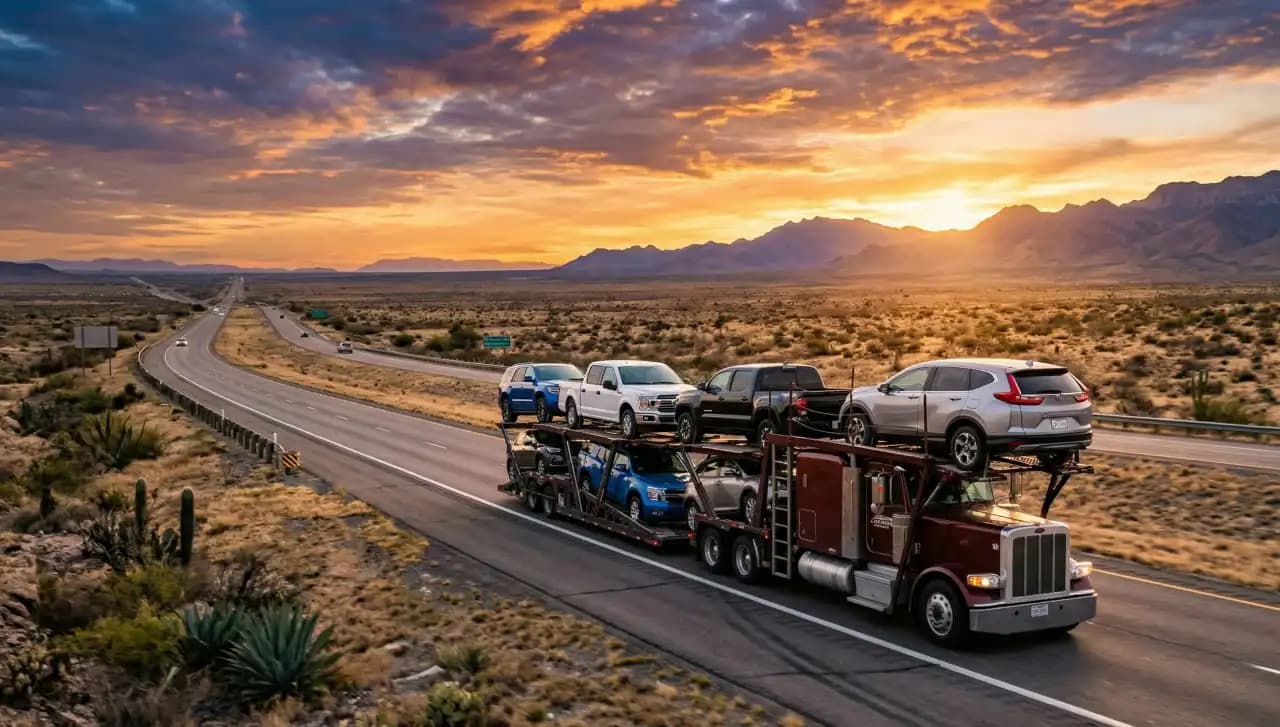

1. Introduction to Texas–California Auto Transport
The Texas-to-California corridor remains one of the most heavily trafficked vehicle shipping routes in the United States. A convergence of economic migration, automotive sales, and seasonal relocation sustains its perpetual demand. Simply put, this is a high-volume lane—and in logistics, volume often dictates efficiency.
In 2026, this route continues to benefit from competitive pricing due to constant carrier movement. Yet, beneath this apparent simplicity lies a network of variables that influence cost, timing, and service quality.
2. Current Car Shipping Rates for 2026
Average Cost Ranges (Open vs Enclosed)
Shipping a vehicle from Texas to California typically costs between $800 and $1,900 for open transport and $1,000 to $2,400 for enclosed transport depending on conditions.
More refined industry averages suggest most customers pay around $1,053 to $1,567 for this route in 2026.
Open carriers remain the economical choice. Enclosed trailers, while more expensive, provide enhanced protection—often increasing costs by 40–60%.
Price Variations by City and Vehicle Type
Shipping costs fluctuate based on origin and destination. For example:
- Dallas to Los Angeles: $825 – $1,000
- Houston to California: $1,120 – $1,733
Larger vehicles—SUVs and trucks—incur additional fees due to increased weight and space requirements.
Per-Mile Pricing Insights
In 2026, car shipping typically ranges between $0.40 to $2.00 per mile, depending on distance and service level.
Interestingly, longer routes like Texas to California often benefit from lower per-mile costs due to route optimization and carrier frequency.
3. Transit Time and Distance Breakdown
Average Mileage Between Major Cities
The journey from Texas to California spans approximately 1,400 to 1,500 miles, depending on the exact cities involved.
Estimated Delivery Timelines
Most shipments are completed within 3 to 8 days, with expedited options available for faster delivery.
Factors That Affect Delivery Speed
Transit times are influenced by weather, route congestion, driver schedules, and pickup/delivery accessibility. Urban areas typically experience faster service due to higher carrier availability.
4. Best Routes from Texas to California
Dallas to Los Angeles Corridor
This is the most efficient and frequently used route. Covering roughly 1,436 miles, it offers consistent carrier traffic and competitive pricing.
Major highways such as I-20 and I-10 streamline this journey, minimizing delays and ensuring predictable transit times.
Houston to Southern California Route
Originating from a major logistics hub, this route benefits from dense carrier networks. It is slightly longer but remains cost-efficient due to high demand and infrastructure accessibility.
Austin to West Coast Logistics Lane
Austin shipments often integrate seamlessly into national transport grids. The route balances speed and cost, making it a popular option for both individuals and dealerships.
How Highways Impact Pricing and Speed
Interstate highways significantly influence shipping efficiency. Routes with minimal elevation changes and high carrier traffic tend to reduce both transit time and cost. Conversely, remote or less-traveled paths introduce logistical friction.
5. Factors That Influence Shipping Costs
Vehicle Size and Condition
Heavier and non-operational vehicles require specialized equipment, increasing overall cost. Larger vehicles also occupy more trailer space, reducing carrier efficiency.
Seasonality and Fuel Prices
Peak seasons—particularly summer and year-end—drive prices upward due to increased demand. Fuel price volatility further compounds rate fluctuations.
Carrier Availability and Demand
High-demand routes like Texas to California benefit from competitive pricing. However, sudden demand spikes can temporarily inflate costs.
6. Open vs Enclosed Transport: What to Choose
Cost vs Protection Comparison
Open transport is cost-effective and widely used. Enclosed transport, while more expensive, offers superior protection against environmental exposure.
When Enclosed Shipping Is Worth It
Luxury, exotic, or classic vehicles warrant enclosed carriers. The additional cost is justified by the enhanced protection and reduced risk of damage.
Risk Mitigation Strategies
Choosing insured carriers, verifying credentials, and scheduling during optimal seasons can significantly reduce transport risks.
7. Why Choosing the Right Company Matters
Expertise in Long-Distance Shipping
Long-haul routes demand logistical precision. Experienced carriers understand route dynamics, regulatory requirements, and operational efficiency.
Insurance, Safety, and Reliability
Reliable transport companies provide comprehensive insurance and transparent pricing. This ensures financial protection and service accountability.
How Yorka Auto Transport Delivers Superior Service
Yorka Auto Transport stands out in the Texas-to-California corridor by combining competitive pricing with meticulous service execution. Each shipment is strategically planned, ensuring optimal routing and safe handling.
From door-to-door delivery to flexible scheduling, every aspect is engineered for customer convenience. With a focus on reliability and precision, Yorka Auto Transport provides a seamless shipping experience tailored to modern demands.
8. Final Thoughts: Planning Your 2026 Shipment
Shipping a vehicle from Texas to California is no longer a complex process—it is a streamlined operation when approached correctly. Understanding current rates, selecting optimal routes, and choosing a reputable carrier are the pillars of success.
With average costs ranging between $1,000 and $1,600 and delivery times under a week, this route offers both efficiency and affordability.
Partnering with a trusted provider like Yorka Auto Transport ensures that every logistical detail is handled with precision. The result is a transport experience that is not only efficient but unequivocally dependable.
Related Articles
Continue reading with these related posts

Top 5 Auto Detailing Shops in Miami to Visit After Your Car is Delivered
Discover the top 5 auto detailing shops in Miami and learn how to protect your vehicle after car shipping with expert care and professional transport solutions.
Best Family Cars in 2026 & How to Ship Them Safely with Reliable Auto Transport Services
Discover the best family cars in 2026 and learn how to ship your vehicle safely with reliable, affordable auto transport services nationwide.

Why Your New Career Shouldn't Start Behind the Wheel: The Ultimate Guide to Corporate Relocation and Auto Transport
Moving for work? Stop the 2,000-mile drive. Yorka Auto Transport provides safe, vetted nationwide shipping for a stress-free career relocation. Get a quote!